
How to install a Marine Generator
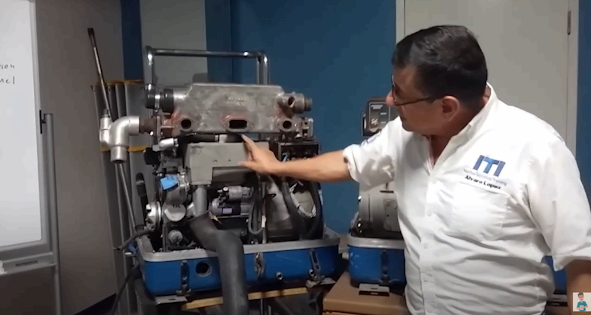
To Install a new generator successfully follow these steps:
1.- Size the capacity of the generator in Kw according to the power of the AC Panel in Kw, plus 20% for the safety factor.
2.- Analyze different places in the engine room to install de generator, avoiding:
– Proximity to propellers
– Locations over the waterline (More than 2 feet)
– Long distances in between the trough complete valve and the raw water pump.
– Proximity of the exhaust gases pipe with cabin grills (Less than 15 in)
– Excessive separation between the battery and the Genset
3.- Prepare fittings, hoses, and filters to install the fuel system
4.- Prepare Hoses, elbow adapters, and mufflers to install the exhaust system (Consider antisiphon devices and Water separators).
5.- Prepare battery cables. Size those cables according to the distance between the battery and the starter. Always install a Battery switch selector.
6.- Ask the owner his preference to install the remote panel and pass the harness avoiding proximity with Antenna cables, AC cables, and Lightning conductors.
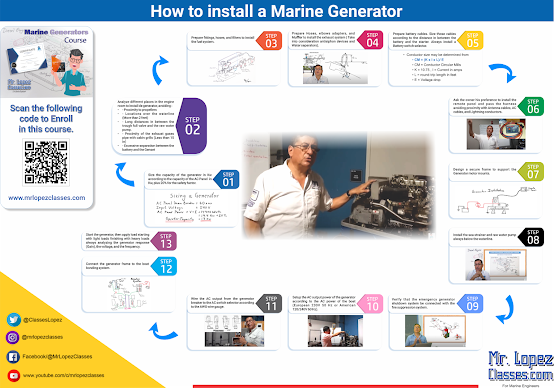
7.- Design a secure frame to support the Generator motor mounts.
8.- Install the sea strainer and raw water pump always below the waterline.
9.- Verify that the emergency generator shutdown system is connected with the fire suppression system.
10.-Setup the AC output power of the generator according to the AC power of the boat (European 230V 50 Hz or American 120/240V 60 Hz).
11.- Wire the AC output from the generator breaker to the AC switch selector according to the AWG wire gauge.
12.- Connect the generator frame to the boat bonding system.
13.- Start the generator, then apply load starting with light loads finishing with heavy loads always analyzing the generator response (Gain), the voltage, and the frequency.
Troubleshooting Marine Generators
Get here the Marine Electricity Handbook where you can find all the information on this and many other topics.

Generator Start but Stop suddenly
- Check oil level
- Check oil pressure gauge
- Check oil temperature gauge
- Verify continuity on fuse panel
- Check seal exchanger cap
- Verify coolant level on the heat exchanger and expansion tank.
- Check water outlet for the exhaust
- Verify temperature on the raw water pump plate
- Presence of oil
- Presence of coolant
- Presence of metals

Low Frequency (UF)
- Bad filters
- Bad Injectors
- Fuel contaminated
- Air and Water in the line
Learn more in the following video
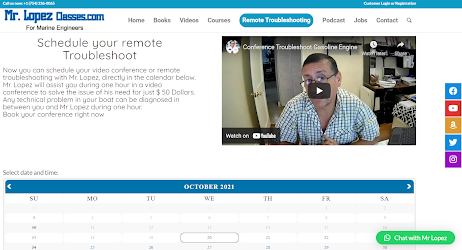
Schedule a Video Call with Mr. Lopez for remote troubleshooting


Leave a Reply
Want to join the discussion?Feel free to contribute!